

Two political battles raging on opposite sides of the Atlantic will have profound consequences for health economics and outcomes research. The national governments of Great Britain and the United States are in high-stakes disputes with the pharmaceutical industry over drug prices. The governments want low-cost medicines for their citizens but also count pharmaceutical R&D and manufacturing infrastructure as a key pillar of their growth agenda. Pharma wants “sustainable” prices and lower operating costs. In these power struggles, HEOR’s traditional role in framing the discussion in terms of costs and outcomes is being sorely tested.

Struggle 1: The Battle for Britain
The UK’s branded-medicines pricing scheme (Voluntary Scheme for Branded Medicines Pricing, Access and Growth, or VPAG) requires pharmaceutical companies to return a large share of revenues to the NHS once a spending cap is exceeded. Rebate rates have risen sharply—from ~5% under previous arrangements to 25–33% today.
Industry leaders argued that VPAG makes the UK one of Europe’s least attractive markets, and that unless something changes, they will reduce their UK footprint and deprioritize launches of new products in the UK relative to other markets. These threats are not hypothetical. AstraZeneca cancelled a planned £450m vaccine manufacturing plant in the UK. Merck abandoned a £1bn R&D center in London and is closing UK discovery operations. Eli Lilly’s CEO has paused nearly £2bn in planned UK investments.
The government argues that rebates protect NHS affordability. Recently, the United States has entered the debate (see below), threatening tariffs on UK products unless the UK pays more for drugs. The British government recently has responded that it will raise the value threshold to between £25,000 and £35,000 per healthy year and decrease the rebate level for its VPAG program.1
Struggle 2: The Art of the Repeal
The Trump administration is unhappy with drug prices in the United States, claiming that we are getting “ripped off,” because we pay far more for branded drugs than other countries. Administration officials also complain that pharma underinvests in R&D and manufacturing in the US relative to the high rate of return they receive for their products. The President threatened high tariffs on imported drugs unless manufacturers comply with two general demands. First, build more manufacturing facilities in the US. Second, offer the US prices lower those negotiated in select European Countries (see CoC #12 on MFN). Like the UK, the threats are not theoretical: high tariffs were levied. Unlike the UK, where high-level bureaucrats and cabinet officials negotiate with pharma execs, President Trump has taken a personal stake in striking “deals,” bringing pharma CEO’s to the White House, and having them stand behind him when he announces negotiated agreements. Initially, undisclosed discounts were secured for in vitro fertilization drugs and for GLP-1 drugs, including a “great” price for one GLP-1 product that has yet to be FDA approved. In total, fourteen manufacturers[a] have announced that they will offer discounts to the Medicaid program for some of their drugs.
[a] At the time of writing Amgen, AstraZeneca, Bristol Myers Squibb, Boehringer Ingelheim, Eli Lilly, EMD Serono, Genentech, Gilead Sciences, GSK, Merck, Novartis, Novo Nordisk, Pfizer and Sanofi have signed agreements.
Mirror Worlds
The science fiction writer William Gibson referred to the US and UK as “mirror worlds:” places where things taking place in one country are essentially a reflection of what is happening in the other. Apropos of his metaphor, in the UK, where prices are “too low” pharma makes threats and takes action to force the government to improve their situation. In the US, prices are “too high”, so it is the government that issues threats and takes action to force pharma to negotiate. Who is winning? I don’t know, but it is clear to me that HEOR analysts and the tools of our trade are being sidelined in these high-stakes discussions. It’s worth thinking through why this is happening, and then what we can do about it.
Killing CEA Softly
When UK government officials increased NICE’s cost-effectiveness threshold, it appears that they stuck with cost-utility analysis (CUA). In fact, it is an abdication of the method. The higher threshold is not based on new research or even the fact that the threshold hasn’t changed in two decades. Instead, it’s a choice that government officials say will allow 3-4 new drugs to be covered by the NHS, timed in response to political pressure. In essence, the UK government has decided that the prospects of losing ground as a research hub, angering constituents who might lose access to new therapies, and dealing with the economic fallout of US tariffs on UK goods justified the budgetary cost of loosening their purse strings to pay for more high-cost therapies.
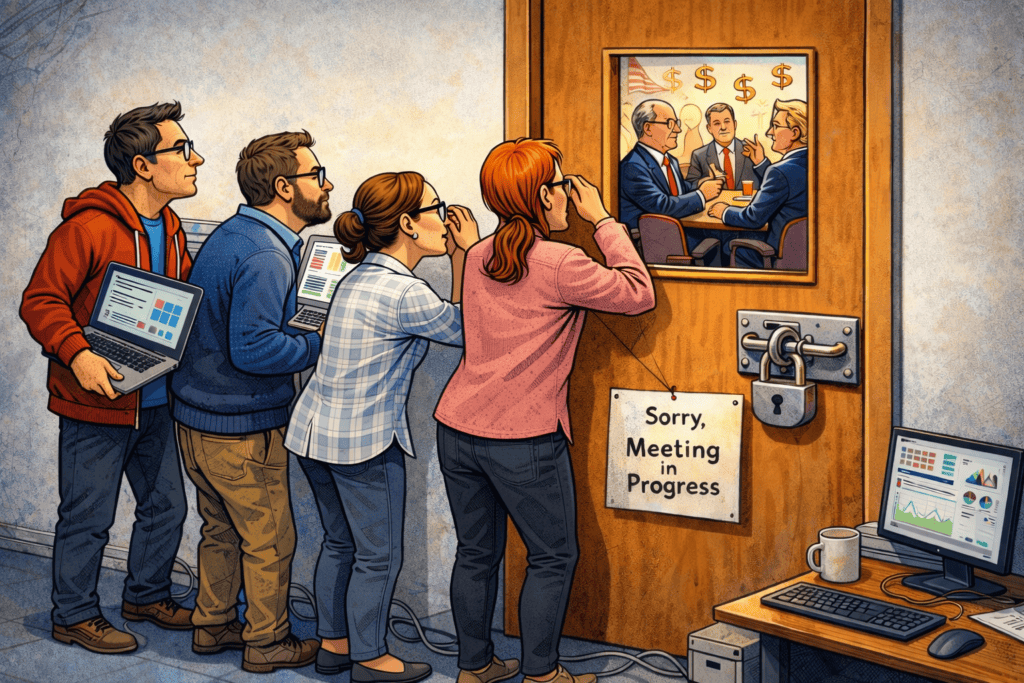
The US government has been antagonistic to using CUA for resource allocation decisions for at least two decades. Nevertheless, it’s approach to price negotiation under the Inflation Reduction Act might be called “quasi-CEA”; since it blends budget impact analysis and estimates of comparative effectiveness to determine drug prices.2 A recent publication suggests that ACA-negotiated prices are generally at or better than a $150,000 per QALY threshold.3 While not ideal, this isn’t a problem for HEOR, right?
Unfortunately for the HEOR community, this Biden-era policy is being “augmented” by a Trump administration approach that moves much farther away from CEA or any other process for defining value. The new “tool” is mano y mano, high-stakes poker-style negotiations that involve threats, bluffing, and (I presume) holding a few cards under each party’s sleeves.
The intent is simply to get lower prices. There is no concern about how well a product works relative to others, no gathering of evidence, not even an insurer or patient perspective. The win is in the number. This approach is so chaotic that it is almost impossible to describe, let alone critique, other than to say that the methodology used for more than half a century to assess value is off the table.
Fighting Back: Creating a Counter Narrative
I feel safe in assuming that most readers of this column believe that cost-effectiveness analysis is our best tool to determine health value for money. We now know that governments will not go to bat for CEA. It is up to us in the HEOR community to make the case.
What should we do? We have a strong case and should be able to develop an effective supporting narrative. But let’s also acknowledge a couple of inconvenient truths.
The first is that we are stuck with a vague term—value—and a complex, generally opaque methodology underlying that term. I have been involved in several focus group discussions with patients, payers, community and academic physicians around the topic of CEA. The great majority of people in these (US-based) discussions equated the word value with words like “on sale,” “bargain”, or “cheap”. One group said it made them think of a popular thrift store chain in my area (Value Village). Laypersons also had a hard time wrapping their heads around the idea that a $25,000 per month cancer drug could be a good “value.” (Honestly, I can’t blame them!). Perhaps we need a couple of ambassadors who can be effective spokespersons. I realize that Matt Damon and Scarlett Johansson might politely decline our offer, but perhaps we use one of our own and can develop our insider’s media communication skills?[b]
[b] One hopeful development: ISPOR has developed an ambassador’s program that includes media training.
The second inconvenient truth is that while CEA is useful for maximizing health under a budget constraint, it is not designed to address budget growth over time. As Emir Gafni famously said, we can go broke practicing cost-effective medicine.4 And it is those high-cost, sometimes cost-effective, new technologies that are busting budgets all over the world. Yes, we could reduce CEA thresholds to a point where few new drugs would be covered. That might slow (not stop) health budgets’ increasing share of GDP. Yet it comes at a high political price, as HEOR leaders in the UK now know well. As others have noted, the world needs other tools that can address this shortcoming.5,6 While those tools are being refined, our new highly-regarded spokesperson should be there to make our case for what CEA can do, and why it’s better for patients.
Strategy 1: Talk About the Wins
From a public perspective, one of the most challenging aspects of CUA is that the losers are easily identifiable but the winners are not. When the UK denies access to a drug that exceeds a value threshold, patient groups who are impacted can easily go to the press and blame the heartless bureaucrats for keeping them from a “lifesaving” (pick your superlative) therapy. Meanwhile, access “wins” that happen because the threshold has forced manufacturers to lower their prices aren’t seen. We must highlight those wins. An example in the US is sofosbuvir (Sovaldi) for patients with Chronic hepatitis C virus (HCV) infection. In 2014, the Institute for Clinical and Economic Review (ICER) determined that a value-based price for sofosbuvir would need to be substantially lowered to justify broad access.7 After Medicaid cited the ICER report in restricting use of sofosbuvir, the manufacturer offered significant rebates then reduced the list price by 40-60%, allowing its use in a much larger population.8
“We must convince the public that occasionally denying access to poor value drugs is the only way to get manufacturers to lower their prices for all beneficial therapies”
More broadly, we must convince the public that occasionally denying access to poor value drugs is the only way to get manufacturers to lower their prices for all beneficial therapies.9 Perhaps a counterfactual no-CEA narrative needs to be described, showing how many drugs would not be available without NICE’s threshold. Sometimes, it might be necessary to show just how far a single price fell after negotiation to make that case.[c] And of course, manufacturers originally denied access are likely to come back to the table later.
[c] The UK generally does not disclose the prices that manufacturers agree to after being listed on the NHS formulary. While there is a good rationale for this in general, occasional transparency would help make the case for the process with the general public.
Strategy 2: About those Models…
There are good models and bad models, but in the end, many people just don’t trust them. To understand why, it’s helpful to contrast CUA with drug regulatory policy. Despite the complexity of designing and interpreting clinical trials, we have the FDA and EMA as arbiters. Clinicians and the public have historically not questioned the FDA’s guidance to industry on trial designs or the regulatory decisions that flow from them.[d] As I can attest from 30 years of experience with CUA, our field does not enjoy that level of trust. I think there are three reasons. First, unlike clinical trials, there is no federally sanctioned regulatory structure for models.[e] While modelers may argue that this is desirable, from the point of view of decision makers, it is a major problem. Second, the clinical community is not trained in modeling and often has a low tolerance for necessary assumptions that are part and parcel of every model. And of course, like the public, they want access to the latest technology. As a result, when a model’s result falls in line with a regulatory approval decision, everything is fine, but when the result is unfavorable, the inevitable result is “model scorn” and criticism of assumptions. It only takes criticism from a few highly-regarded clinicians to sour the public (and politicians) on a “negative” CUA. Finally, our problems are compounded when models are extremely complex and either not available or non-interrogatable. In contrast, the FDA and EMA have transparent processes and make data available to the public. In short, the HEOR community needs to find a “Goldilocks” solution: agree on a single, general modeling approach that is neither too simple nor too complex and a modeling platform that is widely accessible (read: Excel). And we need to make our models available to those who are impacted by them.
[d] The recent upheavals at the FDA brought on by the Trump administration are sorely testing the public’s faith in the FDA. That’s a story for another column.
[e] Yes, there are good modeling practices, but these generally are designed to discourage publication of truly awful models. Beyond the floor, anything still goes.
Strategy 3: Picking Our Battles
Drug manufacturers and politicians are going to do what they do, and the HEOR world isn’t going to change what makes them tick. It’s important to know when to fight, and when to let things go. When an expensive high-profile product comes along, it’s natural to want to get in early and make a statement, particularly when we see the fiscal consequences of widespread adoption. My thinking is a bit different: I first consider what our role could be in the discussion, rather than what it should be. The GLP-1 drug access debate is a good case in point. The products are remarkably effective, public interest is unprecedented, and fairness issues loom large when it comes to coverage and access. Let’s say our models show that they are good value. Or that they are poor value. Will either result change the conversation? If not (and I believe this is the case), what kind of information could we provide that would make a difference? I would rather enter with “what do you need?” discussions with a range of interested stakeholder groups. At Curta, I encourage our clients to engage with potential critics–particularly clinicians–as we build models. While we may or may not impact every decision, what we learn and show along the way can affect conversations about managing access to expensive products.
Summary
HEOR professionals work in a world where regulatory policy and politics have always had outsized influence on access to new medical technology. We lost ground in 2025, but that doesn’t mean we have lost. Affordability and access are never going to go away as political issues. This is a time to find our voice, and to reimagine when and how CUA can play a role in balancing the inevitable conflict between affordability and access.
CONNECT WITH US
The experts at Curta are ready to discuss your evidence and access needs. For more information, contact Scott at Scott.Ramsey@Curta.com.
References
- Wise J. UK-US pharmaceutical deal: NHS will pay £3bn more for new drugs. BMJ. 2025;391:r2538. doi: 10.1136/bmj.r2538.
- Sullivan SD, Hernandez I, Ramsey SD, Neumann PJ. Has the Centers for Medicare & Medicaid Services Implicitly Adopted a Value Framework for Medicare Drug Price Negotiations? Value Health. 2023;26(12):1686-1688. doi: 10.1016/j.jval.2023.10.004.
- Neumann PJ, Cohen JT, Sullivan SD, Xie F. Do Medicare’s IPAY 2027 Negotiated Drug Prices Reflect Value For Money? Health Affairs Forefront. 2025, 10.1377/forefront.20251209.237091.
- Gafni A, Birch S. Incremental cost-effectiveness ratios (ICERs): the silence of the lambda. Soc Sci Med. 2006;62(9):2091-100. doi: 10.1016/j.socscimed.2005.10.023.
- Danzon PM. Affordability Challenges to Value-Based Pricing: Mass Diseases, Orphan Diseases, and Cures. Value Health. 2018;21(3):252-257. doi: 10.1016/j.jval.2017.12.018.
- Lomas J, Claxton K, Martin S, Soares M. Resolving the “Cost-Effective but Unaffordable” Paradox: Estimating the Health Opportunity Costs of Nonmarginal Budget Impacts. Value Health. 2018;21(3):266-275. doi: 10.1016/j.jval.2017.10.006.
- The Comparative Clinical Effectiveness and Value of Novel Hepatitis C Virus Treatments. ICER. 2014. https://icer.org/assessment/hepatitis-c-december-2014/
- Dickson S, Reynolds I. Estimated Changes in Manufacturer and Health Care Organization Revenue Following List Price Reductions for Hepatitis C Treatments. JAMA Netw Open. 2019;2(7):e196541. doi: 10.1001/jamanetworkopen.2019.6541.
- Khan HM, Ramsey S, Shankaran V. Financial Toxicity in Cancer Care: Implications for Clinical Care and Potential Practice Solutions. J Clin Oncol. 2023;41(16):3051-3058. doi: 10.1200/JCO.22.01799.